
Crater Lake National Park: Where Time Carved Beauty From Chaos
By Erin and Monica Pruitt
Introduction
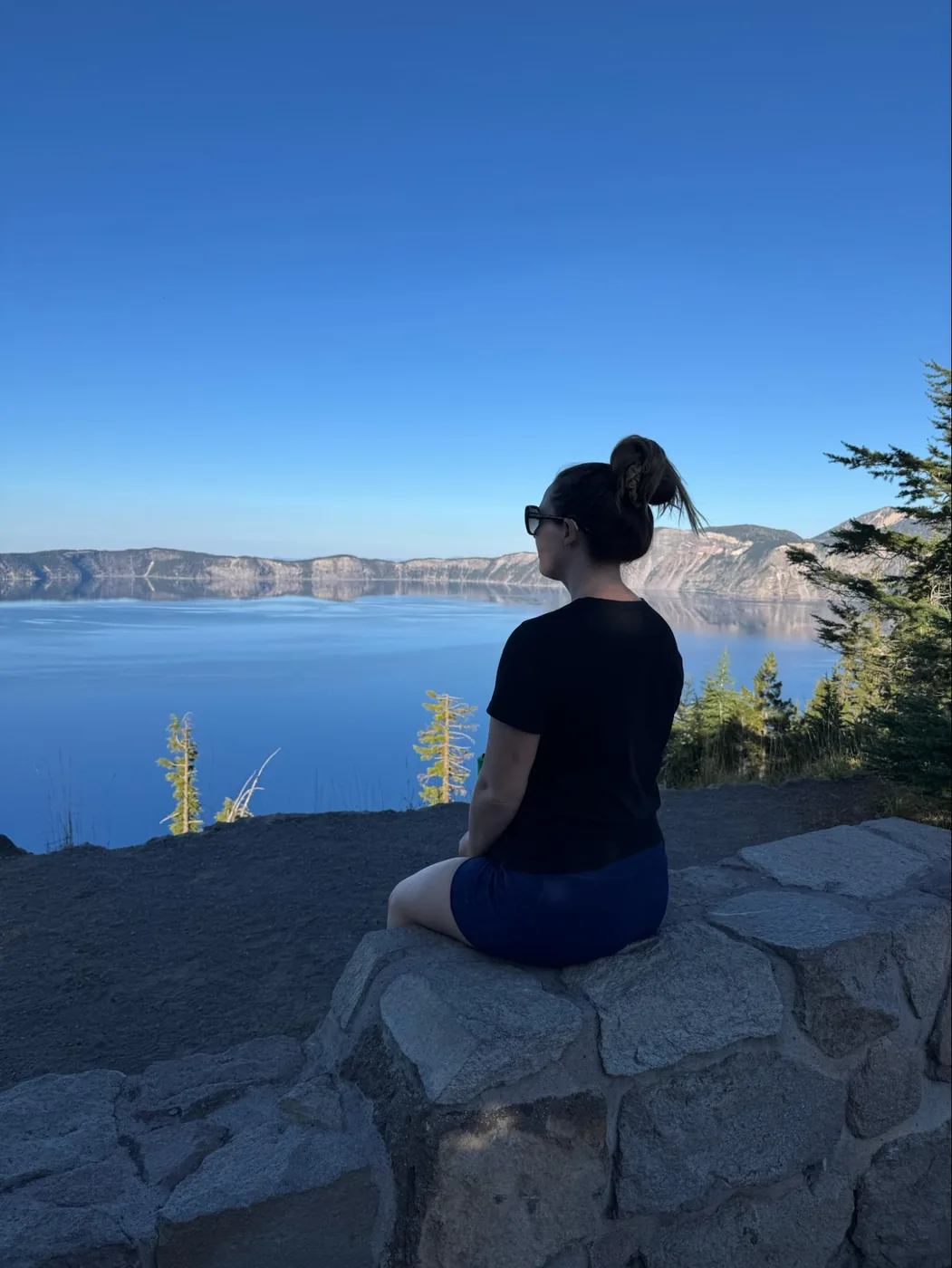
Tucked away in a grand forest, there is a lake. It is the clearest lake we have ever seen. Nestled in the remains of a once-mighty volcano, Crater Lake fills a vast caldera formed thousands of years ago when Mount Mazama erupted and collapsed in on itself. What was once destruction slowly became something breathtaking. Over centuries, rain and snowmelt filled the emptiness, transforming devastation into stillness and silence so pure it hums.
Standing at the rim, we felt small and grounded. The blue stretched endlessly, reflecting sky, trees, and the quiet persistence of nature. True beauty is patient.
Journey & First Impressions
Our journey began in Salt Lake City, where we caught a short flight to Oregon and drove an hour through pine forests toward the park. Driving through the pined wonderland was a treat after spending a week in the desert. We stayed at Union Creek, a small, rustic inn about thirty minutes from the park entrance. With no cell service and only two shared bathrooms for the floor, it felt like being back in college- cozy, cramped, and slightly humbling.
Without cell service, we navigated with paper maps and intuition. We set out for the Steel Information Center to quickly learn about accessibility at the park, which included a tactile map, video with audio description and closed captioning, ranger-led hikes, and ranger talks.
By the time we reached the Rim Village area, the late-afternoon light hit the lake in a way that words can’t quite capture. The water shimmered bluer than blue, mirroring the trees above it in perfect stillness. We found a rock to sit on, unpacked our snacks, and let the view speak for itself.
Adventures & Encounters
The next morning greeted us with crisp air and clear skies, perfect for exploring. We boarded the Crater Lake Trolley, a paid bus tour that loops around the rim and stops at some of the most scenic viewpoints. The trolley itself felt charmingly old-fashioned, with wooden benches and narrow windows framing glimpses of the lake. Our driver, Bill, navigated the winding road with ease while our guide, Laird, brought the park’s history to life.
Laird was energetic and full of stories; some scientific, some legendary. He shared the Native American tale of Mount Mazama’s eruption, in which two gods battled until one was buried beneath the fallen mountain. “That’s how Crater Lake was born,” he said, gesturing out toward the vast blue expanse. He also took a moment to check in about accessibility, asking how he could make the experience more inclusive. Monica explained that using descriptive language would help, and from that moment on, he painted vivid pictures with words: “To the left, a tall green pine with banana-shaped acorns.” His care and attention made the tour one of the most memorable experiences of the trip.
That afternoon, we decided to explore on foot. We followed the map toward Discovery Point Trail, which looked short and easy on paper. In reality, the path was scattered with roots and low branches. Some parts had rock borders that made the trail easier to follow, but they didn’t continue consistently. After about fifteen minutes, the path seemed to spill onto the road. Even as a sighted person, Erin couldn’t tell where it went from there. We turned back, laughing at how our “short walk” turned into a mild navigational mystery.
The following day, we joined a ranger-led hike at Sun Notch. Ranger Bruce led the group with humor and patience, telling stories about the lake’s formation while pacing the group for the incline. His voice became Monica’s guide as we made our way up the trail. When she slowed or veered too close to a boulder, he adjusted instinctively, keeping her safe without taking away her independence. The path wasn’t paved but was well-defined, with just enough obstacles to make it interesting. The view from the top offered a perfect panorama of the lake, overlooking Phantom Ship Rock. Earning a Junior Ranger sticker at the end felt like the cherry on top.
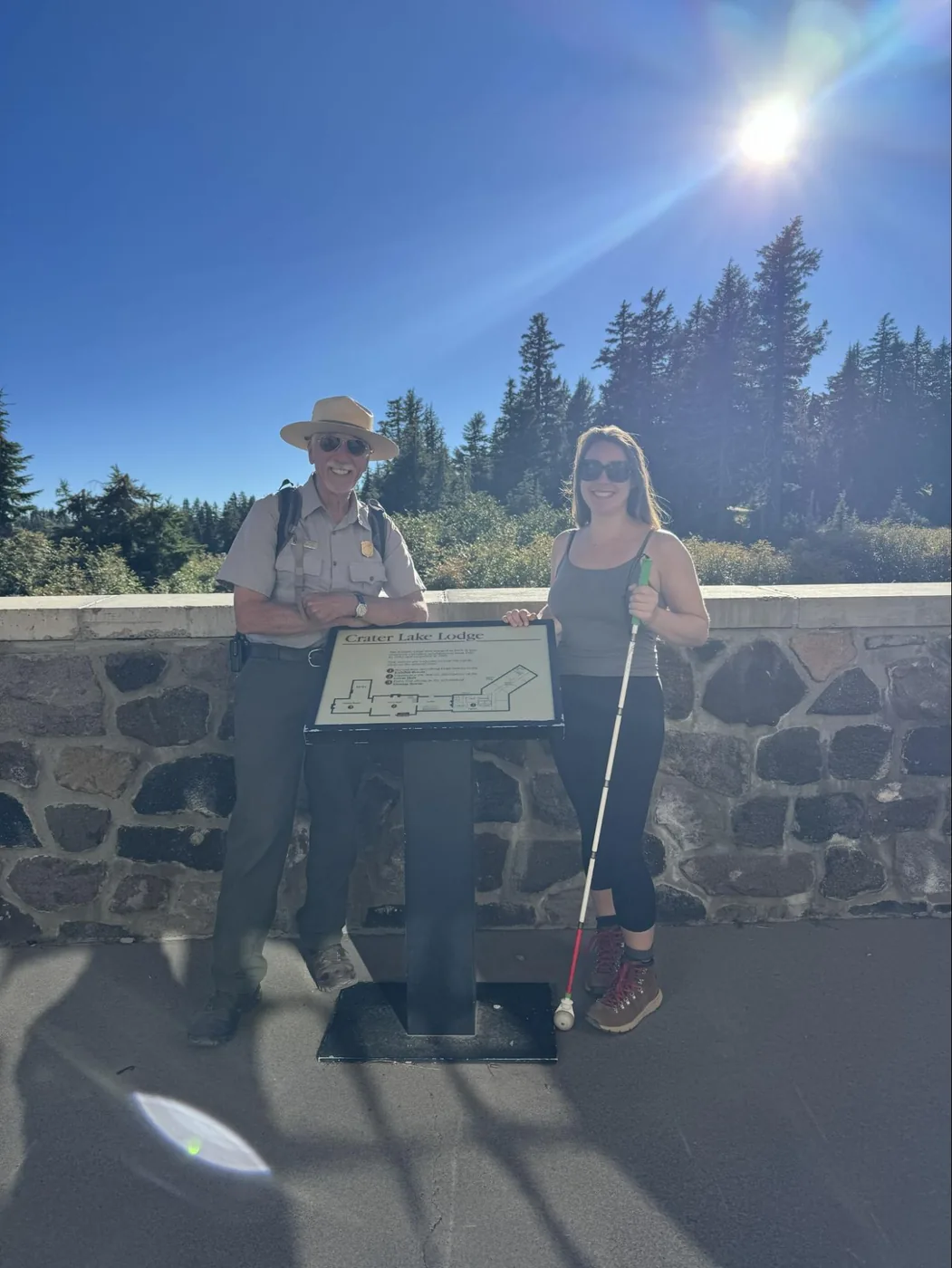
We had hoped to tackle the Watchman Peak Trail afterward, but finding the actual trailhead turned out to be harder than expected. The signage was unclear, and the lack of cell service meant we couldn’t rely on Google Maps. We eventually found a viewpoint overlooking the lake instead and stayed there, content to watch the wind move across the blue water until the breeze got too cold.
Evenings at Union Creek were quiet. We ate leftovers by the campfire on the lodge grounds, or enjoyed mushroom burgers and real homemade pie at Beckie’s across the street. With no cell service and spotty WiFi, there was nothing to distract us from the moment; just two sisters, the cool night air, and the hum of the wild.
Reflection
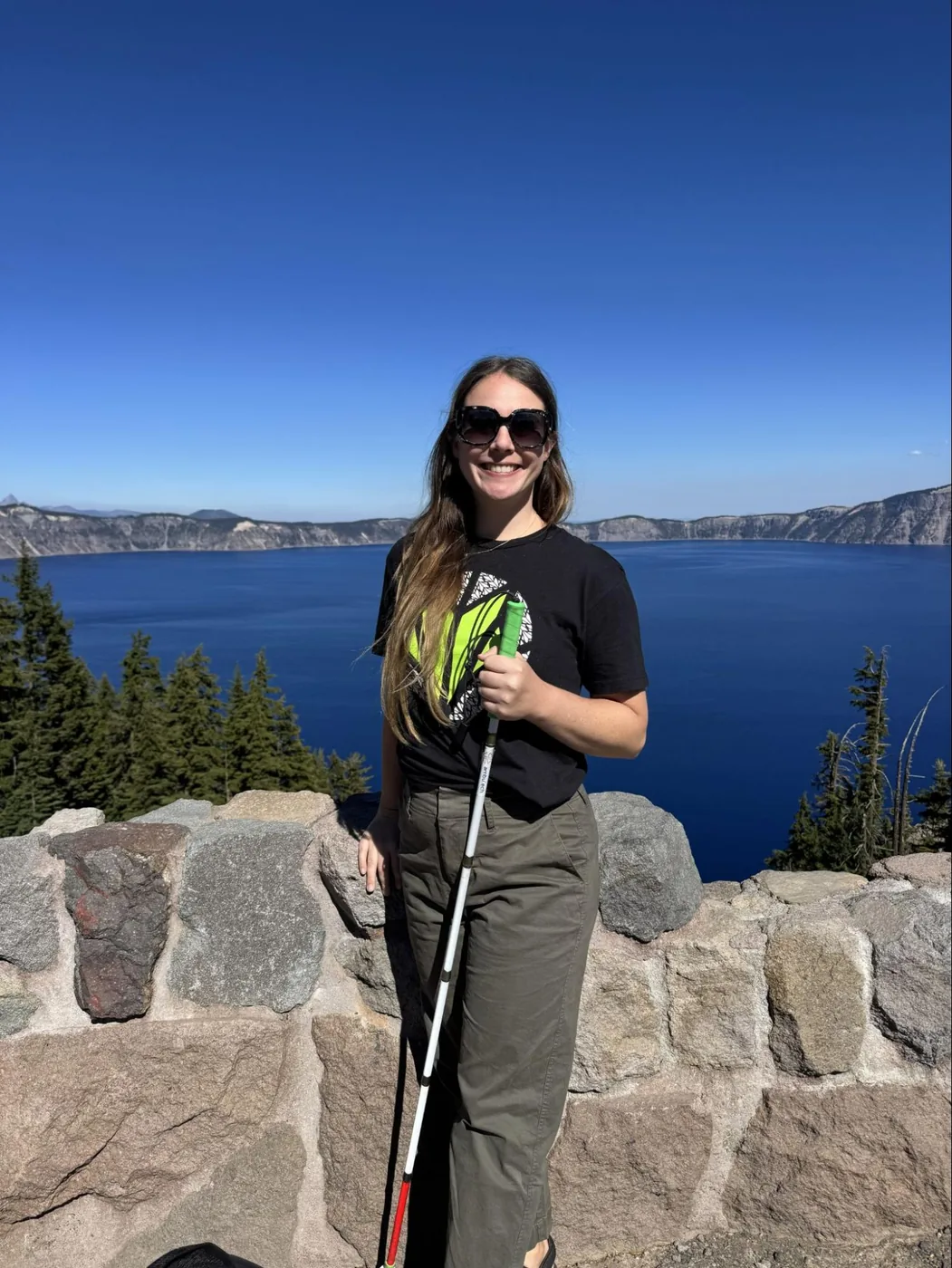
Crater Lake quickly became a favorite for both of us, thanks to its energy and beauty. The wind moves through the pines, the water ripples, and the squirrels beg for human scraps (don’t worry, we didn’t feed them!). When Mount Mazama erupted and collapsed, it sterilized everything within a thirty-mile radius. With time, water slowly filled the caldera and life returned, reminding us that with enough patience, nature heals into something magnificent.
Although accessibility was limited to the visitors’ center, trolley tour, and ranger walks, it was still manageable with the assistance of a sighted person.