
Arches National Park: The Strength of What Stands
By Erin and Monica Pruitt
Introduction
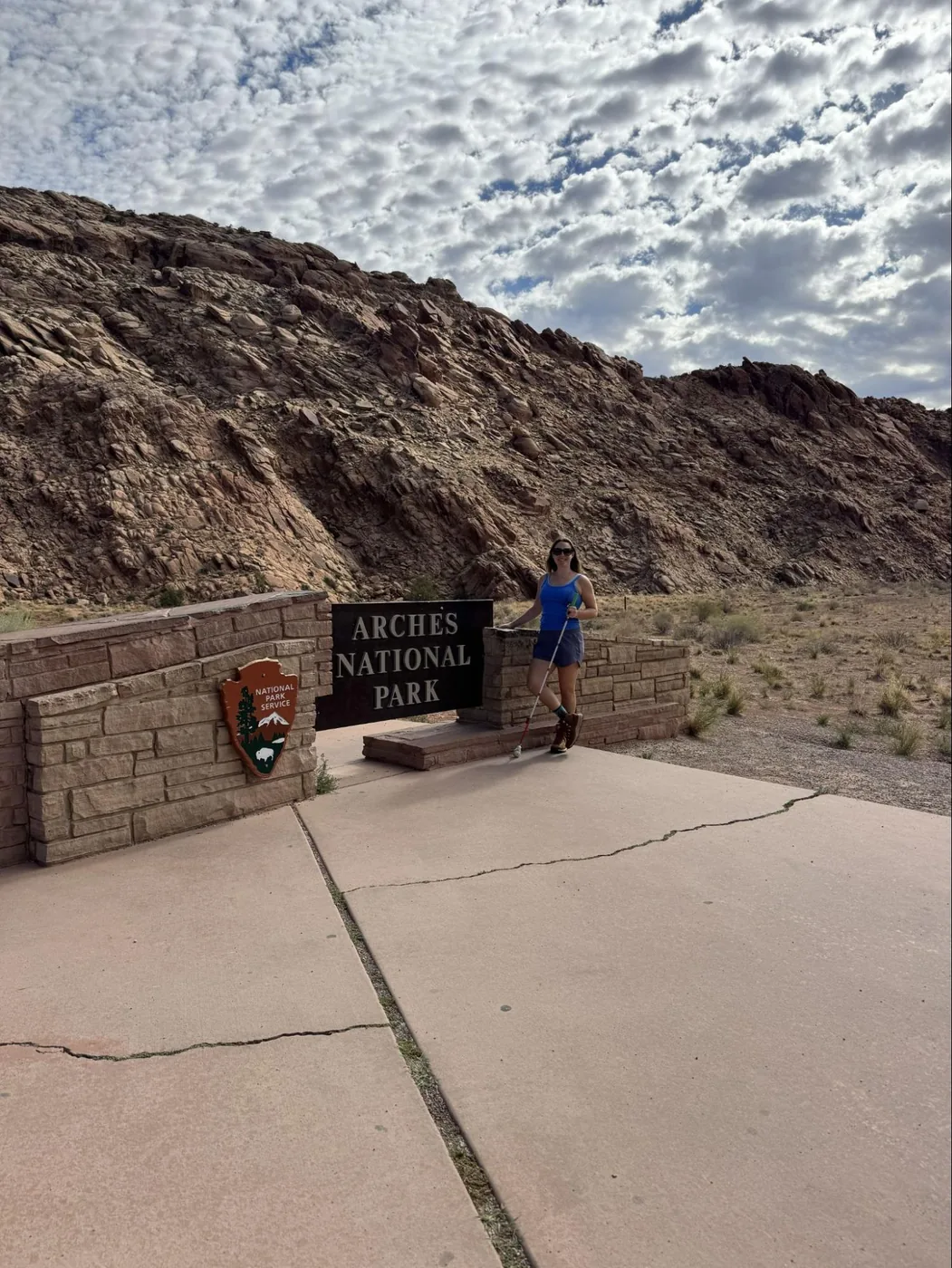
The first thing we noticed about Arches National Park was how otherworldly it felt. It was as if we had stepped onto Mars or into a painting where gravity had forgotten its rules. Towering red rock formations twisted and balanced in ways that seemed impossible. We were awestruck to learn that there are over 2,000 natural stone arches.
After hours of driving through Utah’s desert from Bryce Canyon, we finally arrived in Moab. The small desert town buzzed with energy and adventure seekers. As the sun dipped behind the cliffs, the air cooled just enough to hint at the promise of tomorrow’s exploration.
Journey & First Impressions
On the morning of September 22, we stopped for breakfast in town before making our way to the park for our timed 11 a.m. entry. Arches is wonderfully close to Moab, and the visitor center sits right after the entrance, making it easy to find with plenty of parking.
We chatted with a ranger about accessibility and were pleasantly surprised by what they offered. Although the ranger mentioned that Arches is not known for its accessibility, the visitor center had several thoughtful features. There was a tactile map, a large-print and braille version of the visitor guide, and even a fully charged iPhone with VoiceOver providing audio descriptions for exhibits. The tactile map’s legend had faded from years of use, a quiet reminder of how much these features matter to visitors.
Adventures & Encounters
Since there is no shuttle system, we drove ourselves through the park, stopping at viewpoints that lined the main road, such as La Sal Mountains, Courthouse Towers, Petrified Dunes, and Balanced Rock. Each stop revealed a new shape, like nature’s own gallery of sculptures. The contrast of soft white clouds against the red sandstone felt surreal, as if the world had been filtered through color and heat.
Our first trail was the Lower Delicate Arch Viewpoint, an easy flat walk with a distant view of the park’s most famous landmark. Beautiful, yes, but not quite close enough. So we decided to tackle the Upper Viewpoint, a short but steep rocky climb. The incline tested our endurance under the blazing sun, but when we finally reached the top, the view felt earned. Sitting there, staring at the arch, we understood its magnetism.
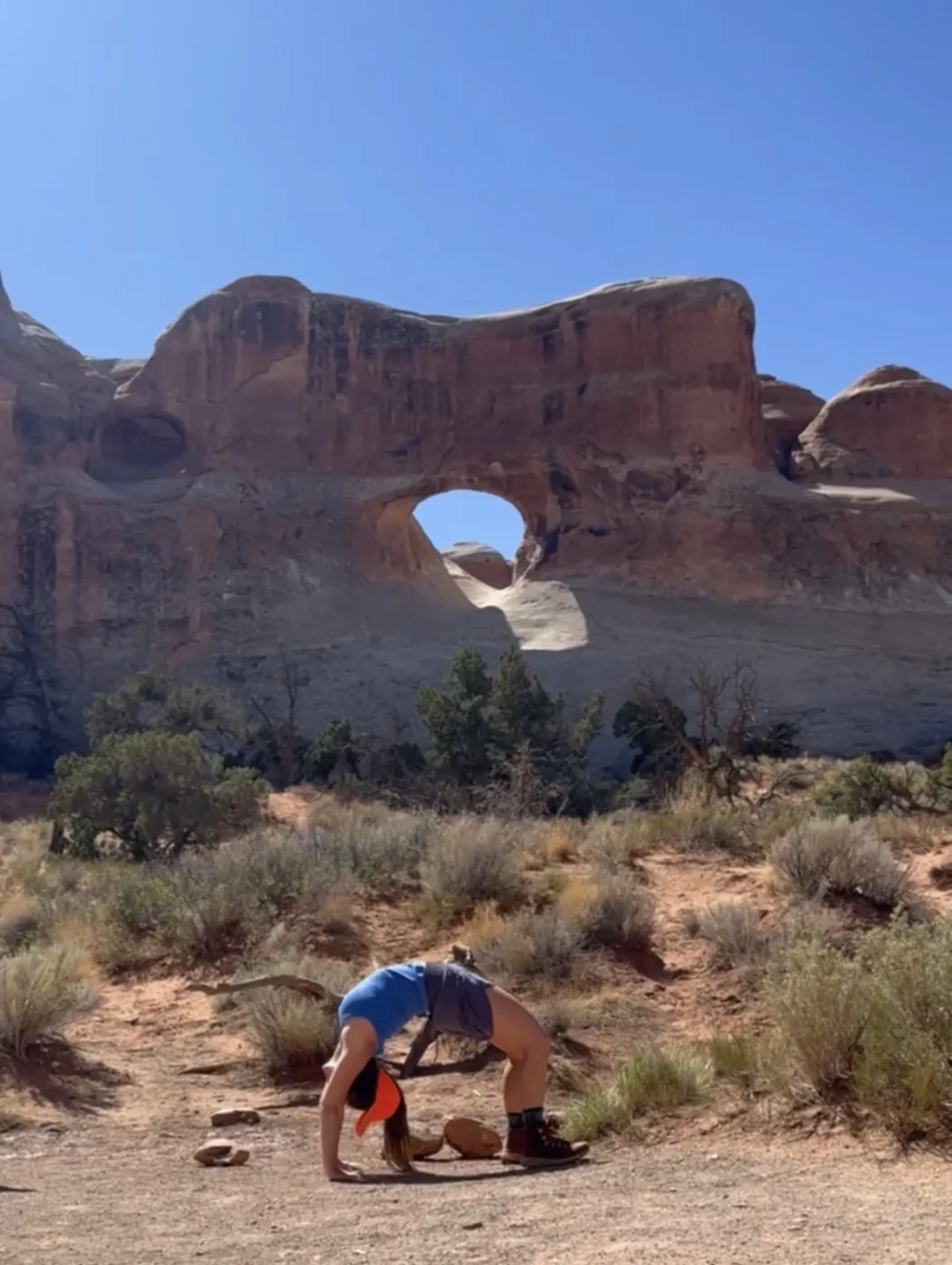
Later, we drove to Devil’s Garden, at the far end of the park road. The trail began with a pleasant surprise: a large placard with braille and printed information about the area. The path itself was sandy and packed, easy to follow but tiring in the heat. We took a short detour to Tunnel Arch, where Monica decided to do a bit of yoga beneath the red rock curve, an arch beside an arch. Strangers smiled, a few offered kind compliments.
We continued until the Landscape Arch came into view, a long, slender curve stretching across the sky like a bridge made of wind. Yet it endures because gravity holds it together. The downward force compresses the sandstone, making them stronger and more resistant to erosion. The weight distributes along the curve and into the base, a reminder that even the most delicate structures can endure through balance and tension.
Reflection
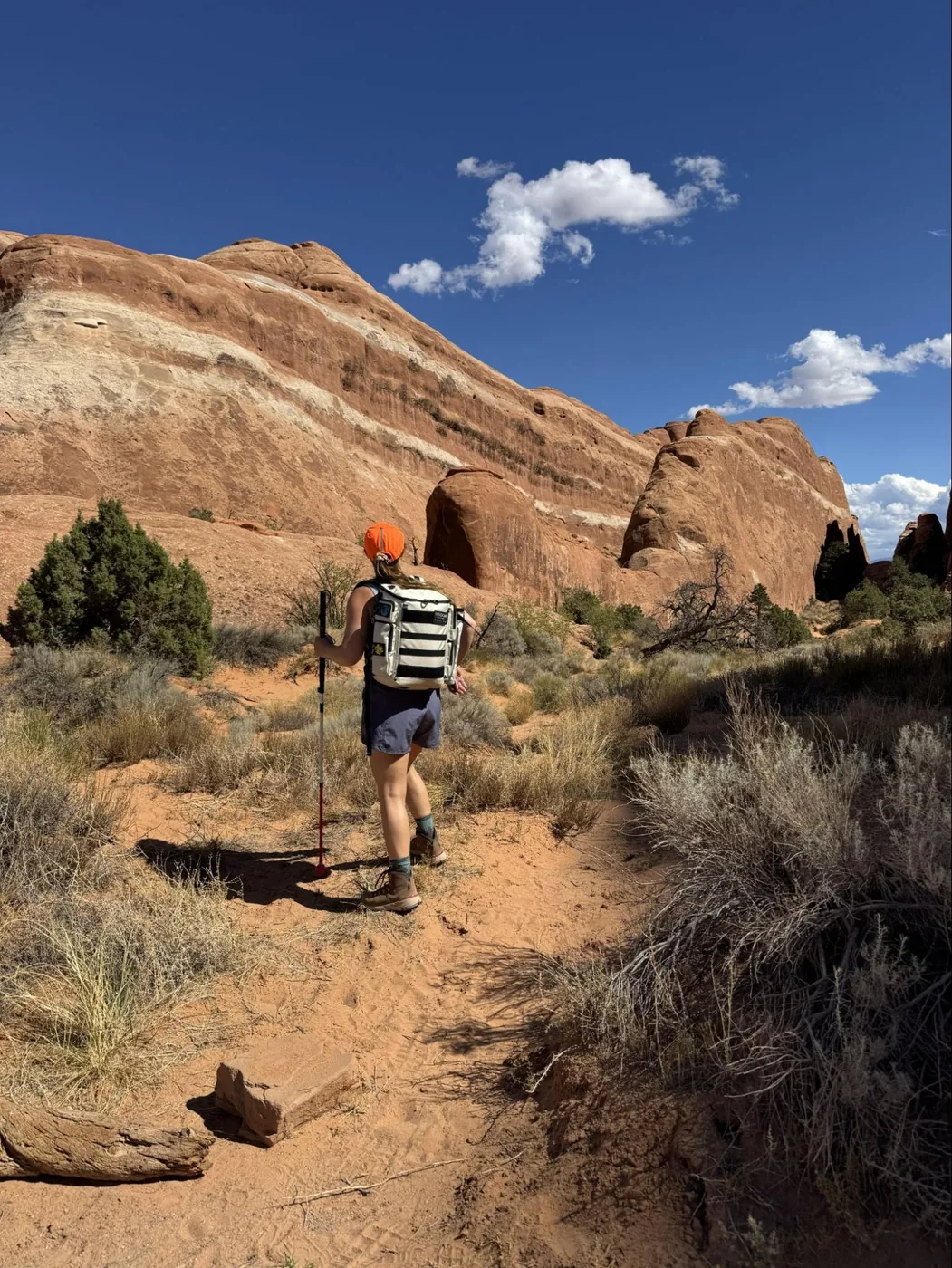
By the time we returned to the car, the desert heat had drained us, but the memories of those arches stayed. Arches National Park reminded us that balance is both literal and spiritual. These rock formations stand against gravity not by resisting it but by embracing it.
Just like them, we find our balance by bending rather than breaking, by learning that strength and fragility can coexist beautifully.
And if there is one travel lesson we will carry forward, it is that pace matters. Some wonders deserve more than a single day.