
Mount Rainier National Park: A Lesson in Humility and Height
By Erin and Monica Pruitt
Introduction
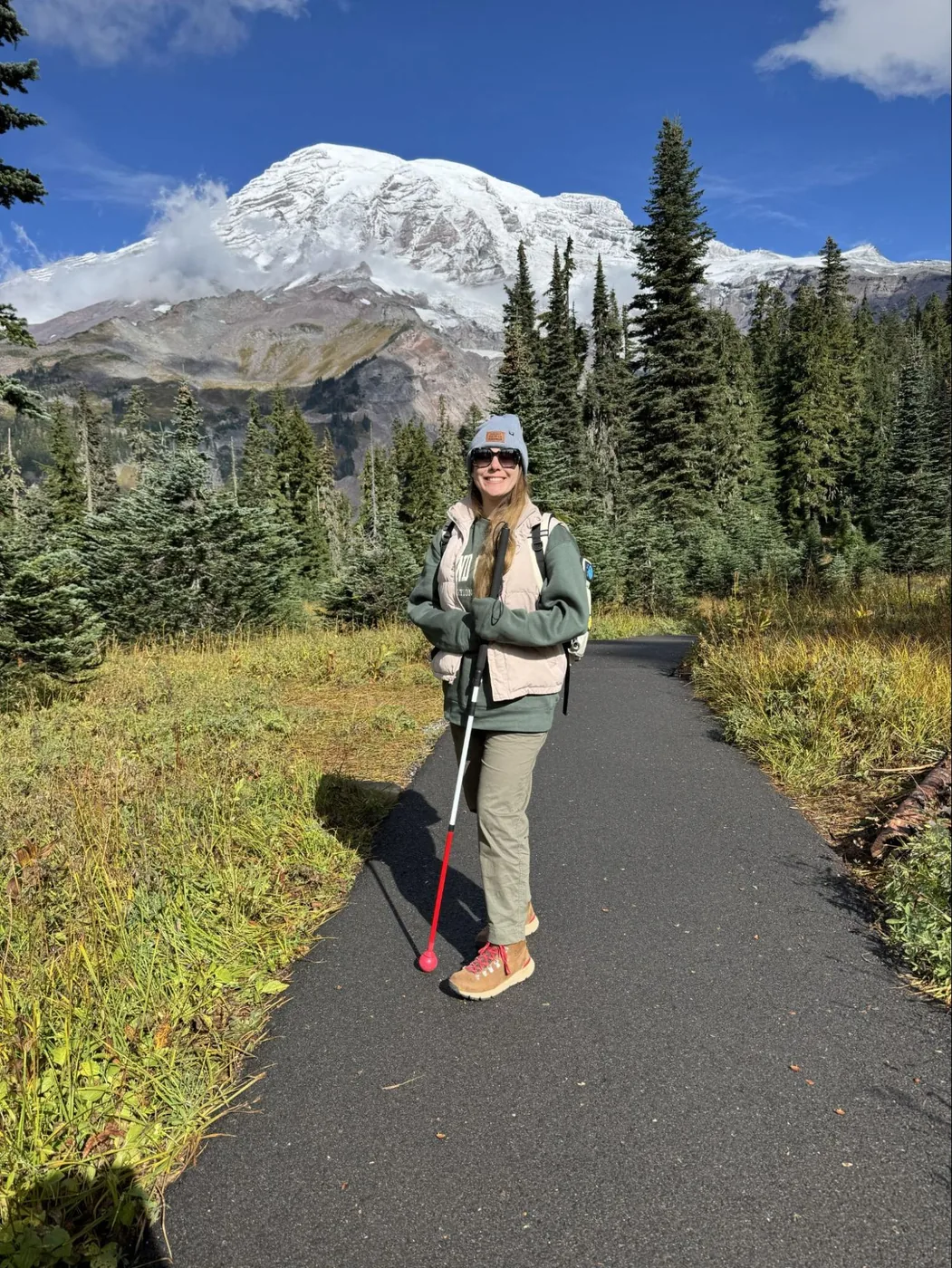
From the moment we landed in Seattle, Mount Rainier loomed on the horizon like a white giant refusing to be ignored. Even from miles away, its size was humbling. The closer we got, the smaller we felt, in that quiet, grounding way that reminded us the world is bigger, older, and more beautiful than we could ever grasp.
Trading Crater Lake’s deep blues for Mount Rainier’s snow-white peaks was a cool and breathtaking reward at the final chapter of our cross-country story.
Journey & First Impressions
We made the 2½-hour drive from Seattle to the tiny Gateway Inn, our home for four nights right outside the park entrance. Traffic leaving the city crawled, but every glimpse of the snow-capped peak made the slowdown worth it. By the time we reached the park, we were buzzing with anticipation and tired from a long day of travel. Nothing compared to seeing that mountain take up half the sky.
Adventures & Encounters
Our first morning, we woke up early and drove straight into the park. The line of cars entering the park stretched endlessly, serving as proof that everyone wanted a piece of that view. We were thankful that our lodging was practically next door, making the wait short.
At the Longmire Information Center, a ranger informed us about a tactile map with braille located at the Paradise Visitor Center, as well as some paved trails nearby. Her passion for accessibility was clear; if she could, she’d rebuild the trails herself to make them more inclusive.
The drive up to Paradise was full of winding roads and scenic pullouts. We stopped at each one (because how could you not?). Narada Falls roared beside us, mist kissing our faces, and Reflection Lakes glimmered like glass. We found a log by the water, unpacked our PB&Js, and just sat there eating in blissful silence.
The “easy” trails, Myrtle Falls and Nisqually Loop, were both paved but still began with a staircase and plenty of incline. By the time we reached the overlook, we were out of breath, thankful that we lived at sea level most of the year.
It’s funny how the park mirrors life: sometimes you think you’ve chosen the easy path, only to find it starts with stairs. But when you finally make it to the top, when you hear the waterfall and see the mountain framed perfectly behind it, every step feels worth it.
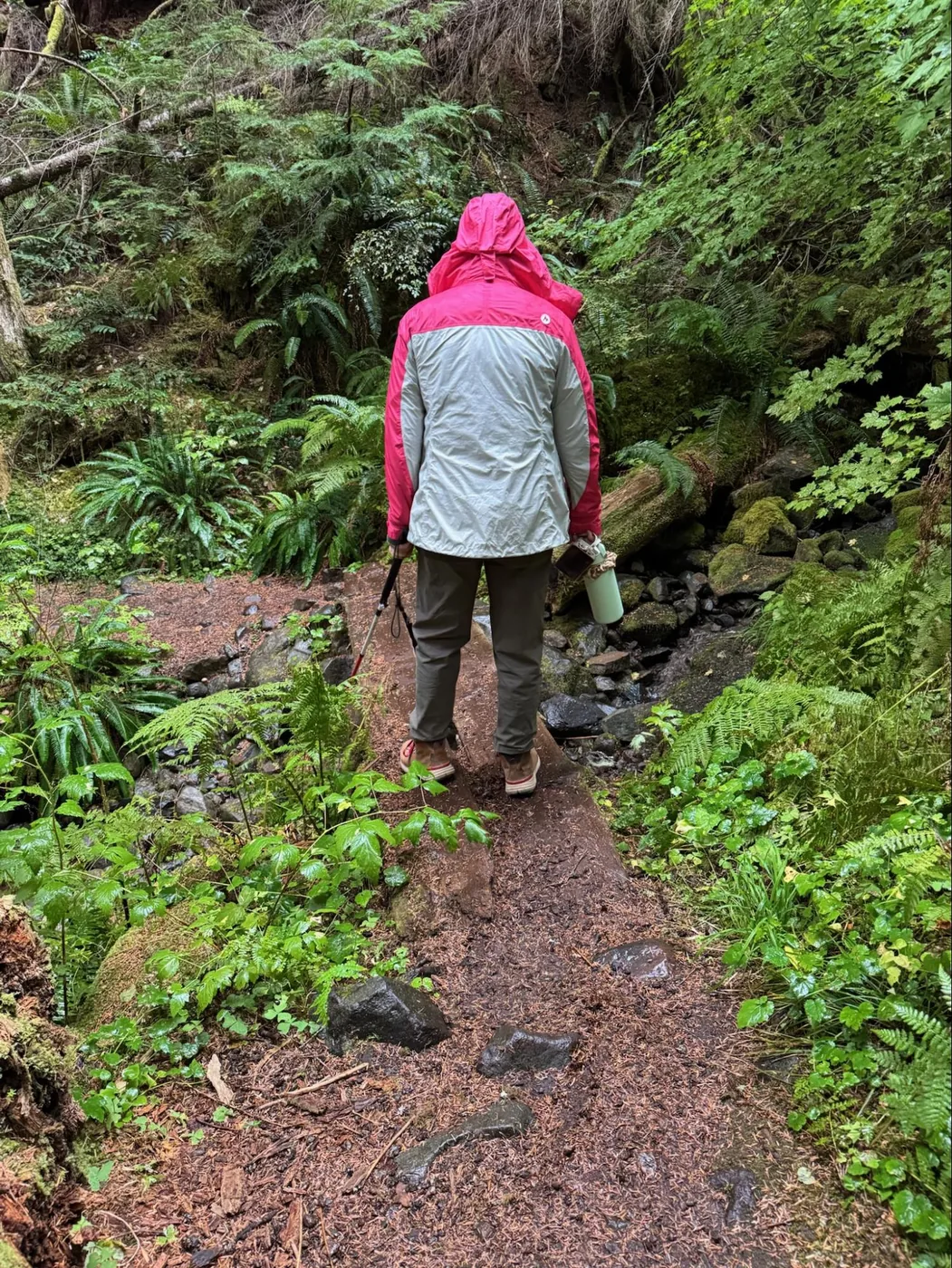
On a rainy Monday, we tried the Twin Firs Loop and immediately learned that “loop” does not mean “flat.” The forest path was full of roots and slick bridges that tested Monica’s balance and patience as a visually impaired hiker. Her cane clacked against roots while Erin called out obstacles.
On our final day, the clouds cleared. For the first time, the mountain revealed itself in full, a towering mix of white glaciers and blue sky. It stopped us in our tracks. While we didn’t see any other disabled hikers, it didn’t matter. The kids were curious about the white cane, but most adults were too busy catching their own breath on the incline to notice.
That was oddly comforting because Monica wasn’t “the blind hiker,” she was just another person trying to make it up the hill.
Before we left, we chatted again with a park ranger about accessibility. She explained that the trail markers were low to the ground so the snow wouldn’t destroy them in winter. While this is practical, it is ultimately challenging for someone with low vision. She said she wished they could add braille. Hearing her care so deeply gave us hope that accessibility conversations are happening in every corner of our parks.
Reflection
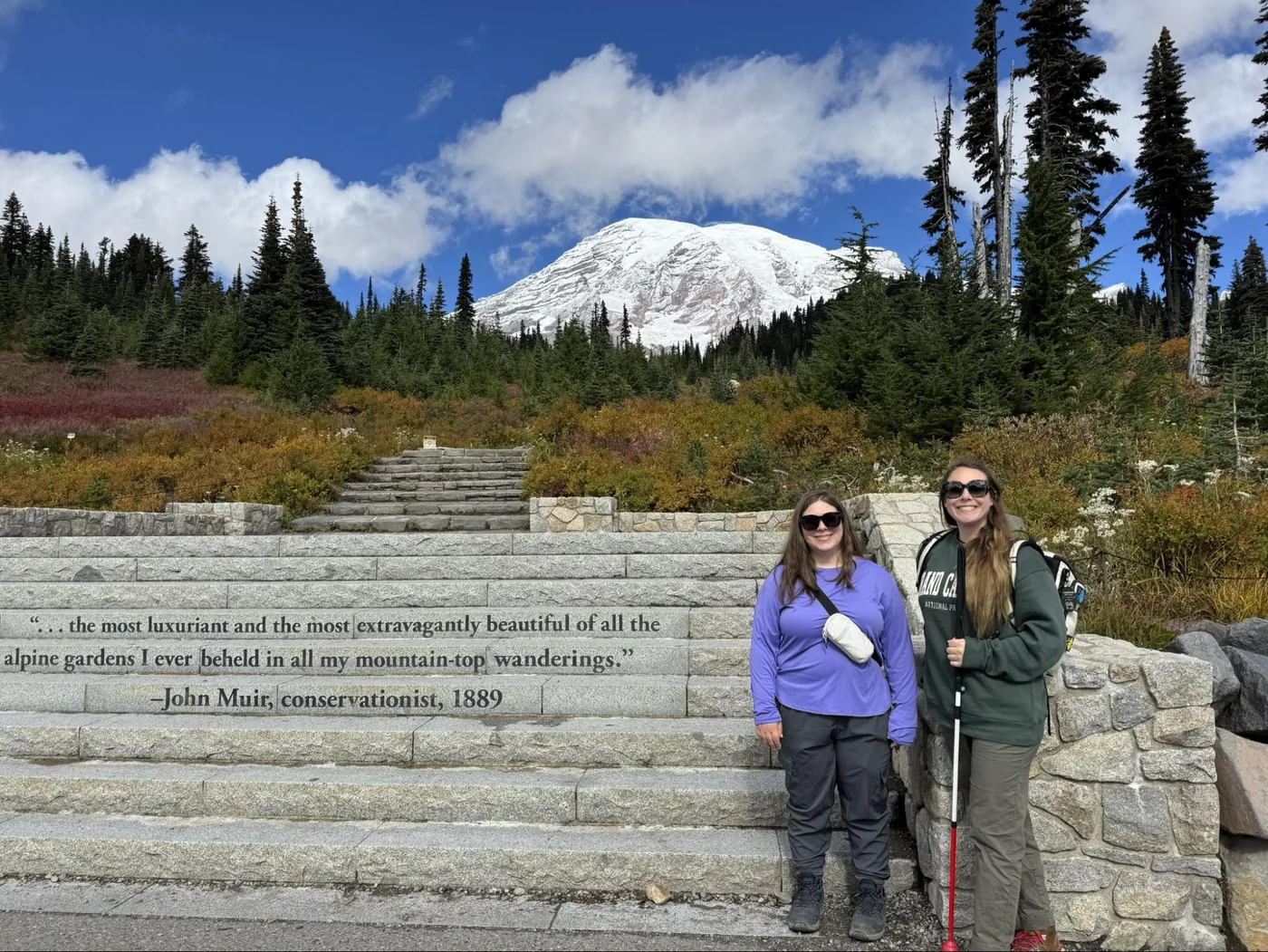
Rainier reminded us that accessibility, like the weather, is always in progress. Some days are cloudy; others, clear. But even when the mountain hides behind mist, it’s still there, steady, patient, and magnificent. As we drove back toward Seattle, Rainier faded into the distance, reminding us that this is what humility feels like. Not weakness, but wonder.