
Bryce Canyon National Park: Where Curiosity Meets Inclusion
By Erin and Monica Pruitt
Introduction
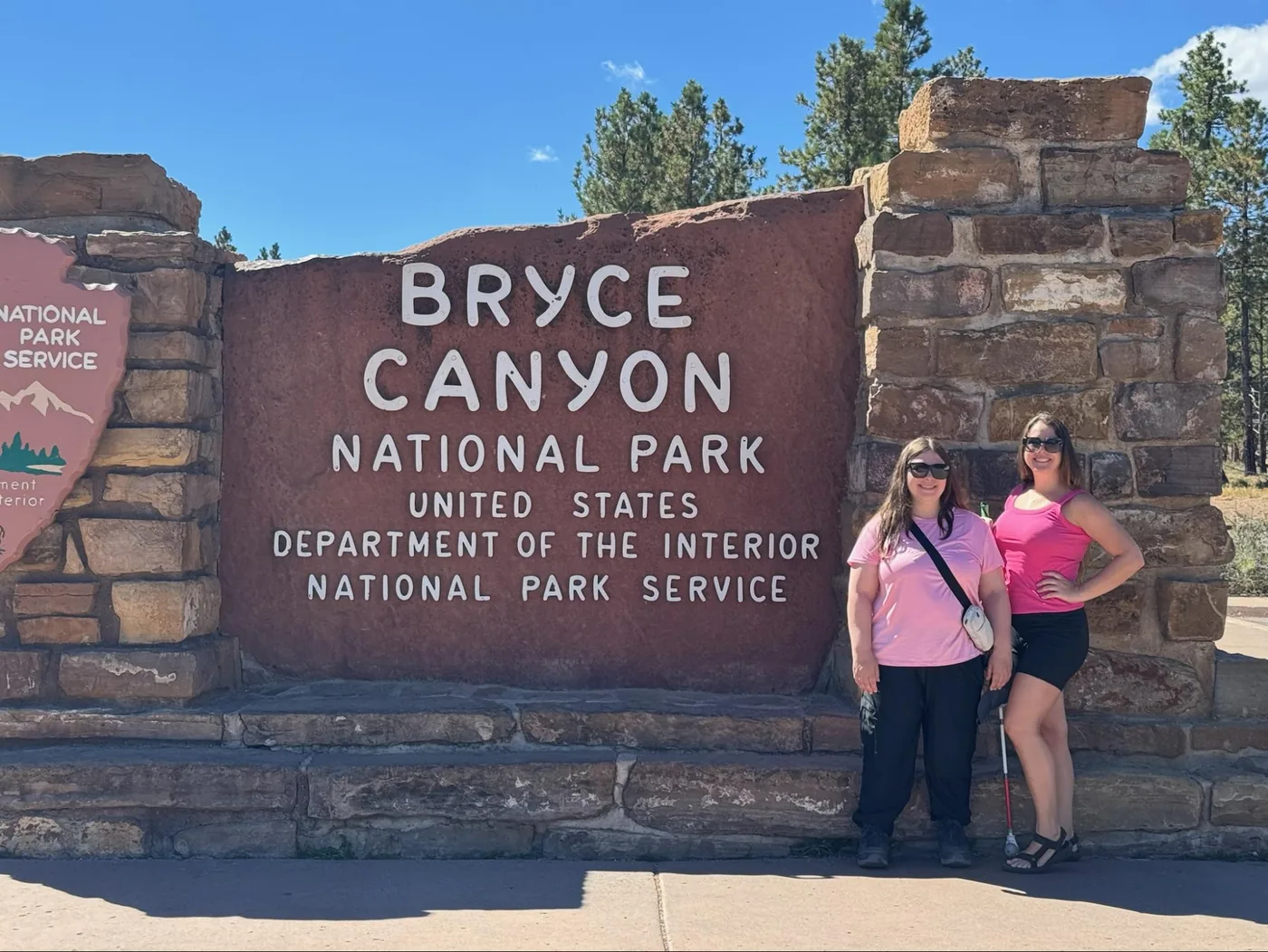
Bryce Canyon National Park is renowned for its unique rock formations, known as hoodoos. There are hundreds, if not thousands, of these towering pillars scattered across vast natural amphitheaters, bowl-shaped valleys formed by erosion, not rivers like a typical canyon. Each one has a slightly bulbous top that balances over a slender, weathered base, giving the impression of stone mushrooms, rough totem poles, or ancient guardians standing watch over the canyon.
These tall, slender columns of rock create a maze of color and shadow that feels almost otherworldly. We had limited time here, just an afternoon stop between Zion and Moab, but what we discovered was more than enough to make us want to return.
Journey & First Impressions
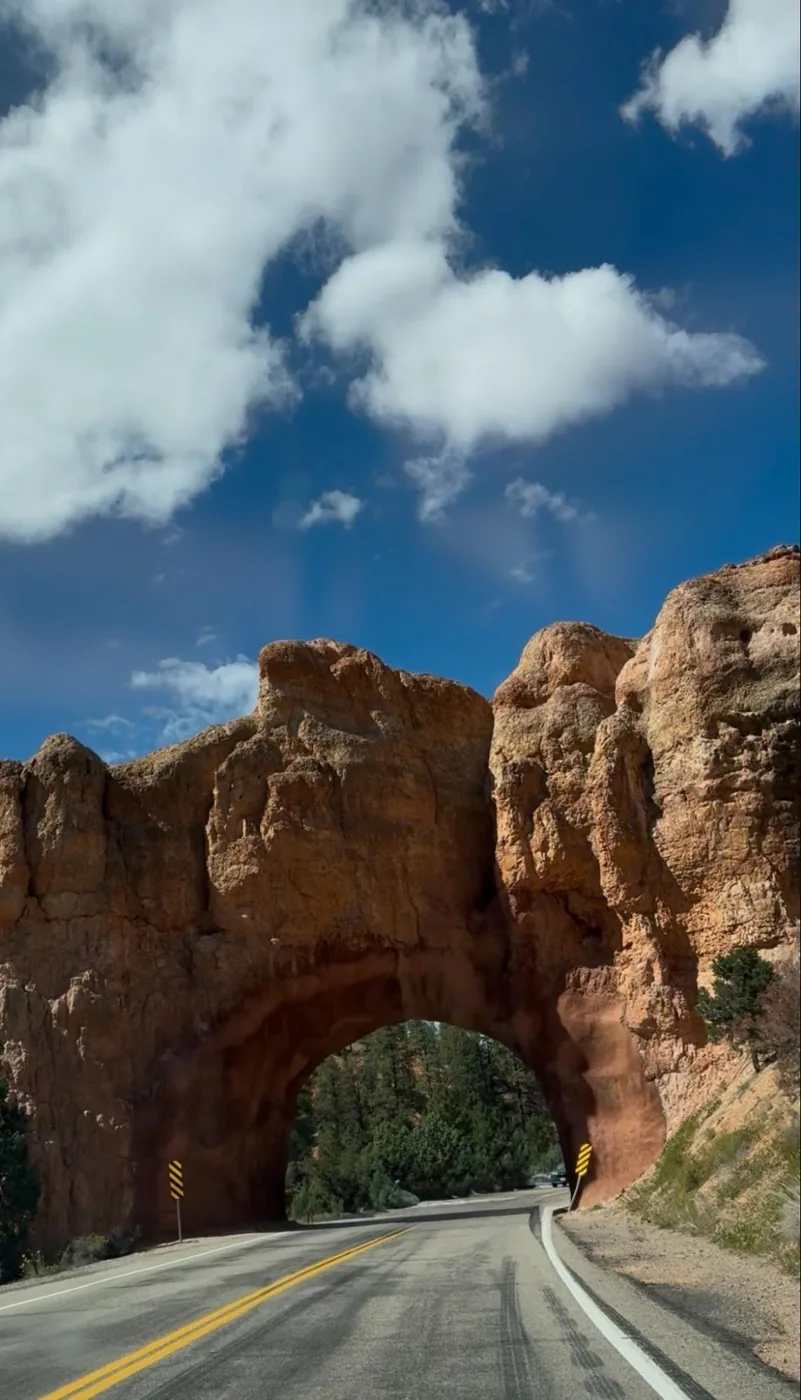
On the morning of September 21st, we departed from St. George, Utah, and began the 2.5-hour drive to Bryce Canyon National Park. The route took us through Dixie National Forest, where the road curved through clusters of pine trees and under two natural red rock bridges that framed the sky like gateways.
When we arrived at the park, the air felt cooler and lighter than it had in Zion, with the soft scent of a sweet pine drifting through open windows. The temperature and the trees offered a refreshing change from the desert heat we had grown used to. The park was also quieter, with fewer crowds and a slower pace that made it easy to take a deep breath and simply enjoy the moment.
Adventures & Encounters
Our first stop, as always, was the visitor center. To our surprise, it set a new standard for accessibility. A tactile map of the building layout greeted us at the entrance, something no other park had offered. Next to it hung an Access Guide that listed every viewpoint, shuttle stop, restroom, and trail, complete with detailed accessibility notes. It was simply there, free for anyone to grab.For once, we did not have to ask about accessibility. It was already part of the design.
Since we did not have much time, we chose a short and easy trail to explore. We ended up at the Sheep Creek Canyon Trail, a gentle path that led downhill through patches of trees and glimpses of rust-red formations in the distance. There was a bit of elevation, but nothing we couldn’t handle. The path was surrounded by lush greenery, making it easy to follow visually and to feel with a white cane. Because it was not paved, there were a few natural obstacles like roots and rocks to step over, but overall, the trail felt manageable.
The hoodoos called to us with their strange shapes and quiet mystery. We could not help but wonder how such delicate structures could stand for thousands of years, with its soft limestone protected by a cap of harder rock.
Reflection
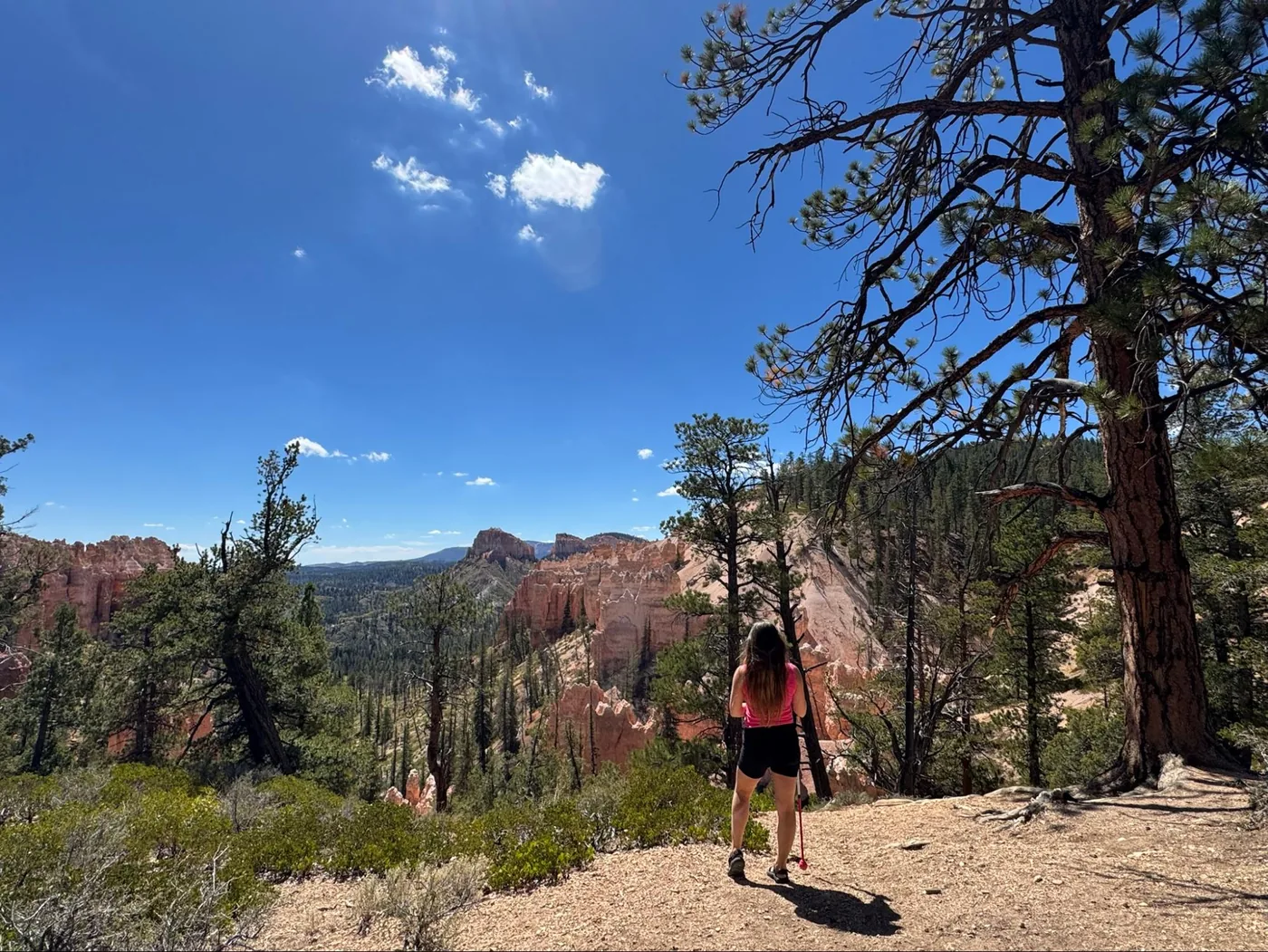
We didn’t have long at Bryce, but it left its mark. The hoodoos stood quietly in the sun, and the park’s inclusive design spoke louder than words. As we drove away, we promised ourselves we’d return with more time, because some places deserve to be explored slowly.