
Grand Canyon National Park: The Power of Stillness
By Erin and Monica Pruitt
Introduction
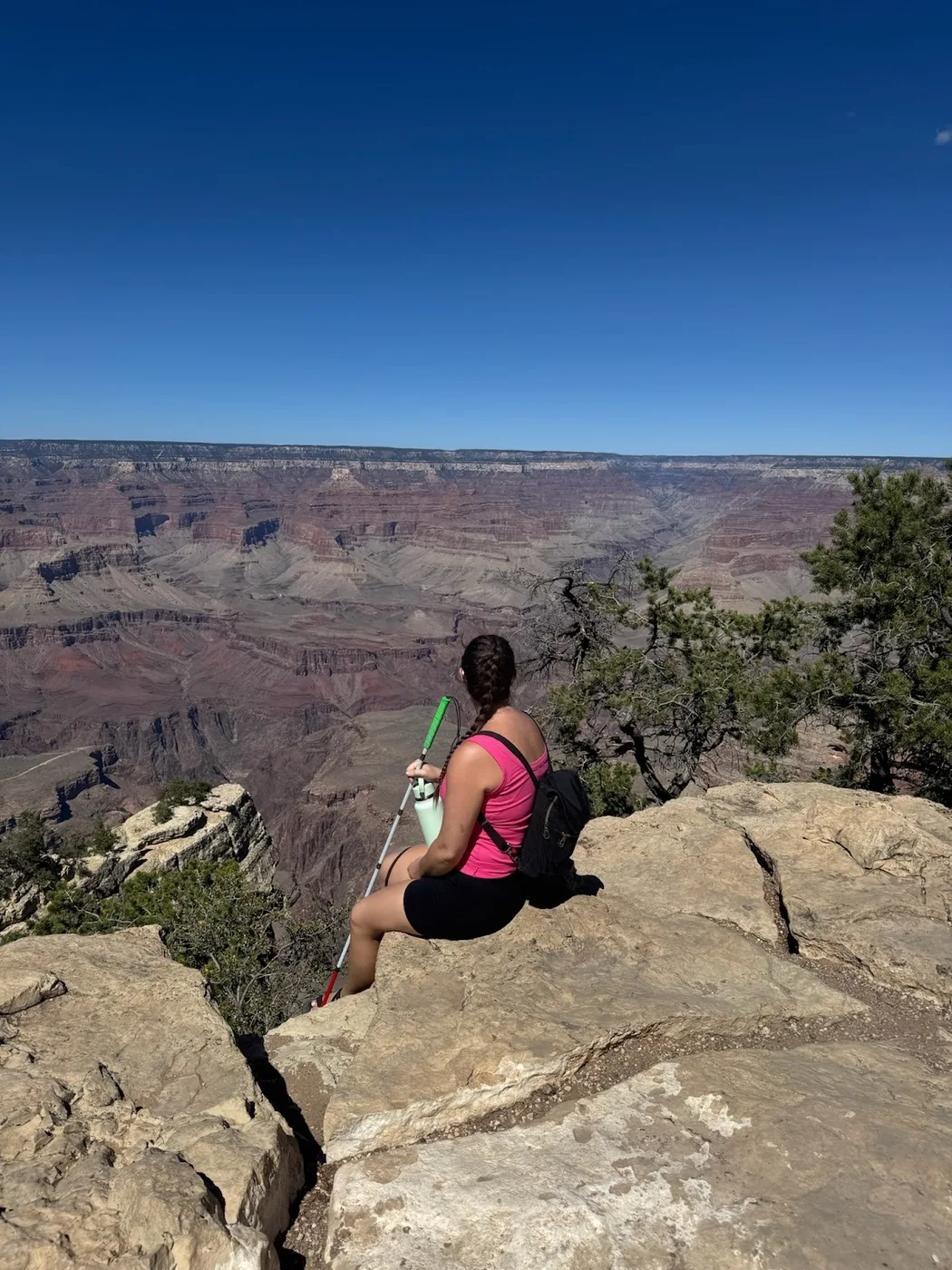
The Grand Canyon was far more than grand. It was ancient and immense, stretching on for nearly two thousand miles. It was silent in a way that made the noise inside us go quiet too. As we stood at the rim, we felt small in the best possible way, almost as if a single strong gust of wind could carry us through the railings into the depths below. There was a sense that the canyon was alive yet content in its stillness, holding a strength that didn’t need to move to be felt. It doesn’t call attention to itself; it simply exists, steady and unyielding, shaped by the patience of time and water.
As beautiful as it is during the day, the park transforms at sunset. As the sun descends beyond the rim, the sky turns pink and orange, the canyon walls glow red, and then everything softens into smoky blues before fading into true darkness.
Journey & First Impressions
We left the red rocks of Sedona behind, winding through the tall pines of Flagstaff before the trees gave way to flat stretches of open land. The drive north was quiet and unremarkable. It was the kind of road where time feels suspended. By the time we reached the small town just outside the park entrance, the world had already begun to feel different. It felt emptier, calmer, and heavier with silence. Even before seeing the canyon, we could sense its presence, as if the land itself was holding its breath.
We stayed just outside the park, allowing for a short drive to the park entrance. Our first stop was the visitor center in town, which was more of a souvenir shop but still had a friendly staff member who helped answer our questions about the park. Once inside the official park visitor center, the tone shifted. The displays offered a wealth of information, including details on accessibility. Right next to the visitors center was a wide, paved path with clear signs that guided us to Mather Point, where the canyon opened up beneath us like an ancient scar across the earth’s surface. A cool wind swept through, carrying the faint call of ravens echoing in the distance.
Adventures & Encounters
Our first full day was spent near the rim, following the paved path toward the geological museum. It was a short, steady walk that led us to a massive tactile map of the canyon. We took advantage of the orange bus line right outside the museum to bring us back to the visitor center to spare the newly formed blisters on our feet.
The next morning, we decided to explore more of the rim trail using the park’s shuttle system. This is one of the most accessible ways to experience the canyon. We parked near the visitor center again and hopped on the blue line to reach the red line, which goes to an otherwise off-limits place via car. We quickly found a rhythm: ride, walk, rest, repeat. We’d hop off at a viewpoint, wander along the trail to the next bus stop, and then climb aboard again. Thankfully, we found seats each time despite the crowds of people all eager to see the same breathtaking views.
Some stretches of the rim trail were paved and easy to follow, while others grew rougher and led right to the canyon’s edge with no railing in sight. One wrong step could have been a disaster, and every gust of wind made us tighten our footing. Yet despite the unease, this was one of our favorite parts of the park. The quiet was deep and uninterrupted, and standing so close to something so vast was both humbling and peaceful. Looking out over the canyon felt like being suspended between fear and wonder.
As the day went on, we learned two important lessons: bring more water, since there were limited refueling stations, and always use the bathroom before getting on the shuttle, or embrace the porta-potty.
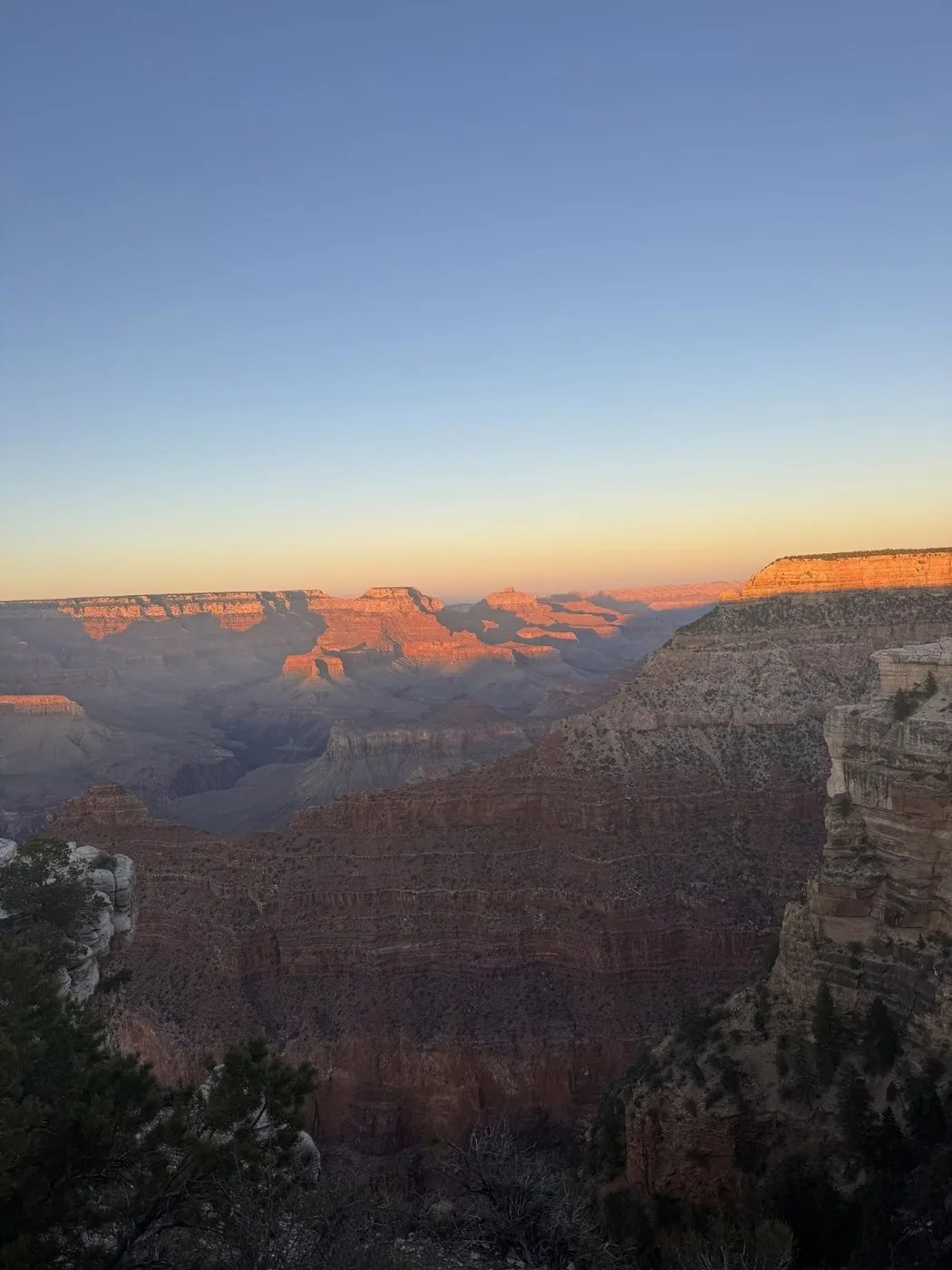
By late afternoon, we stopped at a small gift shop near the end of the shuttle line, a perfect spot for one last wide view of the canyon. The ride back, however, was crowded and slow, looping through every stop on the return route while we wished the bus would move faster. By the time we finally made it back to the main visitor center, the sky was already glowing red. We hurried to Mather Point just in time to see the last light fade, catching the canyon on fire in color before falling back into shadow.
Our last evening was the quietest, since Erin was coming down with a cold. We parked closer to the transfer point between the red and blue lines and took the shuttle out to watch the sunset again. This time, we walked along sections we hadn’t explored the day before to find the perfect vantage point. We found a rock to sit on and stayed there for hours, saying nothing, just appreciating the view. Finally, night was falling, and the canyon changed colors as the light faded, shifting from red to orange to purple, then finally to blue.
As the sun disappeared completely, Monica whispered, “And just like that, I can’t see anything.” It wasn’t said with sadness, just truth. The day had turned to night, and her limited vision had gone with it.
Reflection
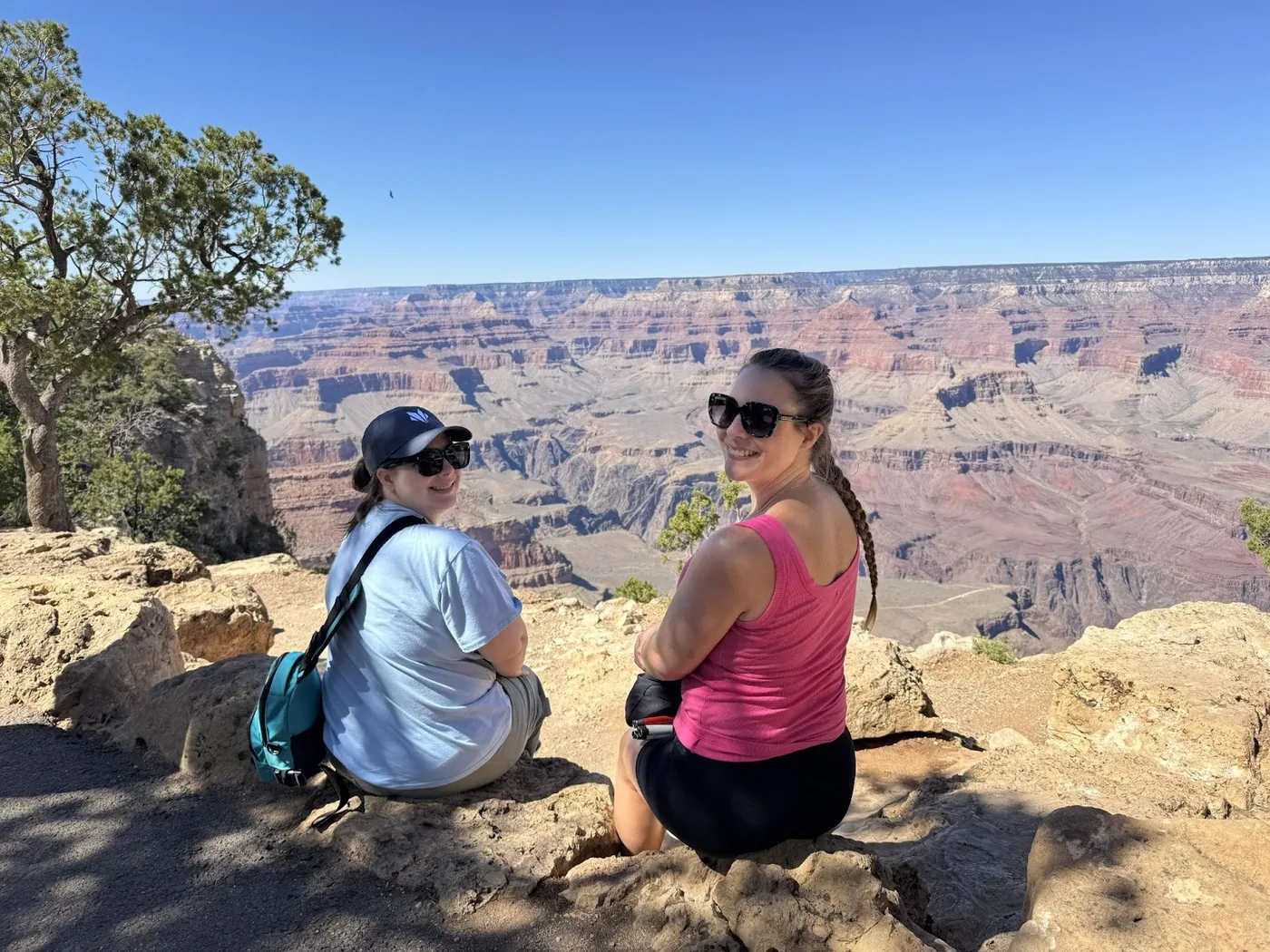
The Grand Canyon was one of our favorite stops. Its vastness is impossible to describe until you are standing there. We were surrounded by wind and quiet, sensing both the weight and the stillness of it as light and shadow moved across layers of stone stretching farther than the eye, or Aira, can reach. Even while walking, we found ourselves pausing again and again, drawn to the endless depth of it all. From certain viewpoints, we could trace the path of the Colorado River far below, appearing impossibly small compared to the scale of the canyon it carved.
What struck us most was the canyon’s quiet power. It doesn’t need to move to make you feel something. It simply exists, inviting you to be still with it.
Standing at the rim at sunset, the colors fading from gold to deep blue, we felt that same stillness take root in us. It reminded us that strength isn’t always loud or forceful. Sometimes, it is calm, ancient, and sure of itself.